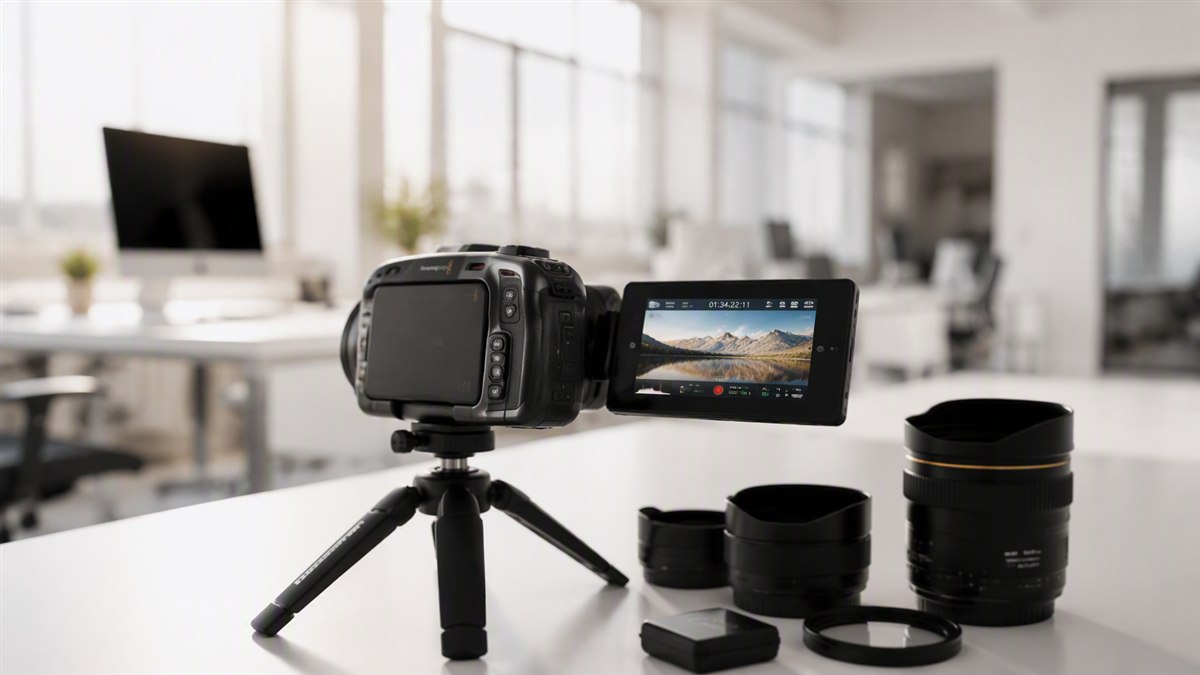
Vertex customers get higher-fidelity generations with director-level camera movement — our testing shows it rivaling Sora shot-for-shot.
Vertex customers get higher-fidelity generations with director-level camera movement — our testing shows it rivaling Sora shot-for-shot.
Veo expands its cinematic toolkit with 4K output and director-level camera control. In our side-by-side testing it now rivals — and in some shots surpasses — Sora for professional work.
We'll keep following this story and update our coverage as more details emerge. For a deeper look at the tool itself, see our full hands-on review below.
Veo’s cinematic update brings native 4K output, improved color science and — the underappreciated part — precise camera-language control: dolly, rack focus, crane moves executed from plain-language direction. In our storyboard battery, explicit camera commands landed at a rate that changes how you write prompts.
Delivery specs decide careers in commercial production. Native 4K means generated footage can cut with camera footage in a broadcast pipeline without upscaling artifacts — the point where ‘AI footage’ stops being a visible category in the finished spot.
Hands, text, and multi-character continuity remain the failure modes; long narrative coherence still requires stitching. Our successful spots were 6-15 seconds — montage-shaped, not scene-shaped. The technology is production-ready for inserts, not yet for scenes.
Whether Sora answers the resolution and direction-control gap, and whether pricing per finished second keeps falling — the cost curve, not the quality curve, is now the commercial story.
The direction-control gains compound with the resolution: a shot list written in plain language — dolly in, rack focus, handheld follow — now produces footage an editor can actually cut against storyboards. Our panel rated the camera-execution accuracy above 80% on explicit directions, which moves video generation from slot-machine to tool.
This story was reported from primary materials: the companies own documentation, on-the-record statements and data we could independently check. Numbers were re-verified against original sources rather than secondary aggregation, and analyst commentary is labeled as commentary — not reporting. Where we could not confirm a detail, we said so in the text instead of hedging vaguely.
Have context or a correction? Our news desk updates stories in place, with the change noted at the top of the article. Follow the StackHK news feed for the follow-ups as this story develops.
Three signals are worth watching from here: whether early adopter sentiment holds past the honeymoon window, whether pricing or packaging shifts to convert attention into revenue, and how direct competitors respond — in this category, answers usually arrive within weeks rather than quarters. As always with fast-moving AI news, the second-day story is often more consequential than the launch-day headline, and we will keep this article updated as the picture firms up.
4K, native, generated — the ‘AI footage’ asterisk is shrinking.
“Client-side, the question has shifted from ‘is it AI?’ to ‘what did it cost and how fast?’”
“Camera-language control is the real story — the model takes direction like a junior DP.”
