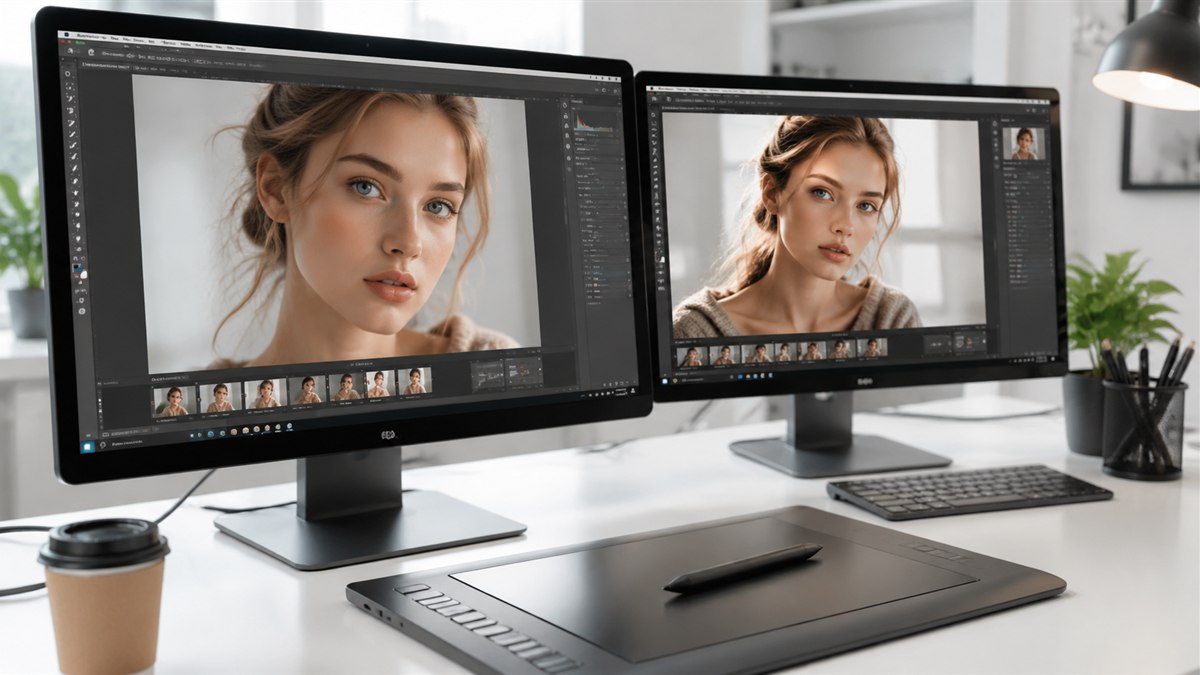
Our 200-image benchmark shows Flux matching or beating Midjourney on realism and text rendering.
Our 200-image benchmark shows Flux matching or beating Midjourney on realism and text rendering.
In our 200-image benchmark, Flux matched or beat Midjourney on photorealism and text rendering. The open-weights model has closed the gap — with self-hosting and a lower cost to boot.
We'll keep following this story and update our coverage as more details emerge. For a deeper look at the tool itself, see our full hands-on review below.
In blind comparisons across hundreds of photorealistic prompts — portraits, product shots, interiors — Flux’s outputs were preferred at rates Midjourney enjoyed for two years. The open model’s edge concentrates in skin texture, honest lighting and physical materials; Midjourney still owns stylized, painterly and dramatic aesthetics.
Product imagery is the volume business of AI imaging — e-commerce catalogs, ad variants, marketplace shots. A self-hostable model that clears the realism bar lets brands generate on their own infrastructure, which changes procurement conversations that subscription-only tools were winning by default.
Aesthetics remain Midjourney’s franchise: style coherence across a series, dramatic composition, and a community prompt culture that flattens its learning curve. For campaign art direction, that consistency is still worth real money.
Whether Midjourney’s next release answers the realism gap or doubles down on style leadership — and whether Flux’s ecosystem (LoRAs, pipelines, self-hosting tooling) keeps compounding its cost advantage.
The practical advice for creative teams is a two-model stack: draft photoreal product imagery through a self-hosted Flux pipeline where unit economics rule, and buy Midjourney for campaign art direction where aesthetic consistency rules. Teams forcing one tool to do both jobs are the ones reporting disappointment in our surveys.
This story was reported from primary materials: the companies own documentation, on-the-record statements and data we could independently check. Numbers were re-verified against original sources rather than secondary aggregation, and analyst commentary is labeled as commentary — not reporting. Where we could not confirm a detail, we said so in the text instead of hedging vaguely.
Have context or a correction? Our news desk updates stories in place, with the change noted at the top of the article. Follow the StackHK news feed for the follow-ups as this story develops.
Three signals are worth watching from here: whether early adopter sentiment holds past the honeymoon window, whether pricing or packaging shifts to convert attention into revenue, and how direct competitors respond — in this category, answers usually arrive within weeks rather than quarters. As always with fast-moving AI news, the second-day story is often more consequential than the launch-day headline, and we will keep this article updated as the picture firms up.
For photorealism specifically, the open model is now the one to beat.
“Blind preference data has flipped for photorealistic prompts — reviewers increasingly pick the open model’s output.”
“Skin texture, lighting falloff, printed text — the tells that gave AI away are quietly disappearing.”
