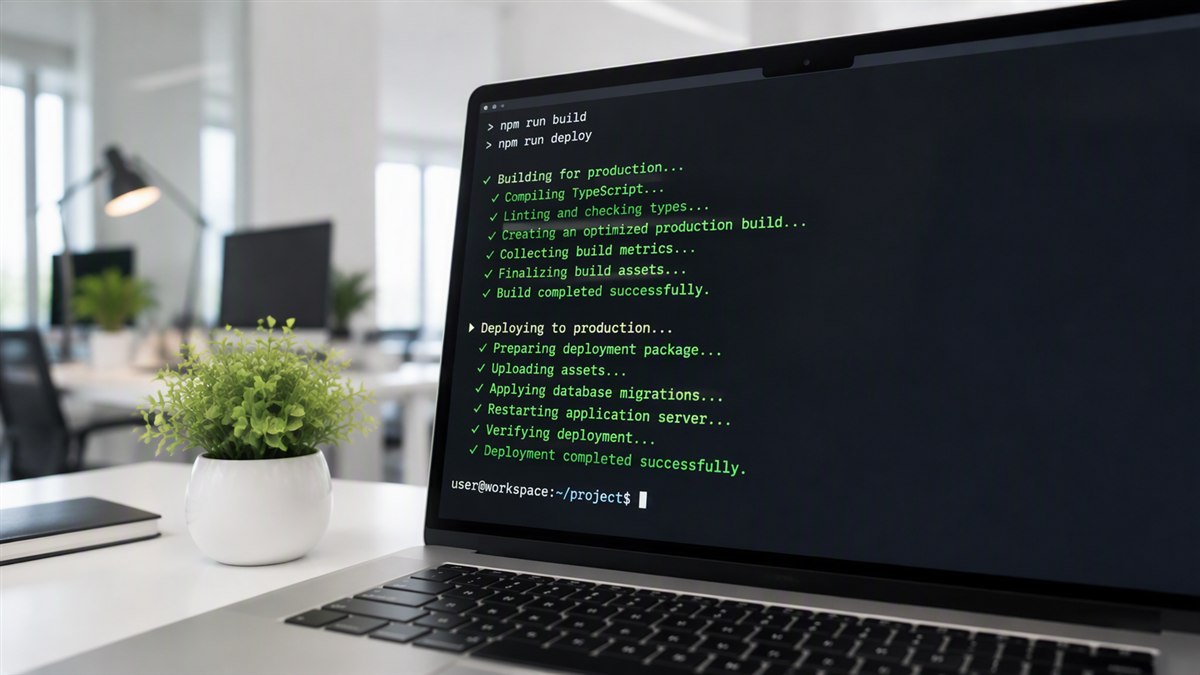
The free VS Code agent plans, edits, runs, and self-corrects — with any model you connect.
The free VS Code agent plans, edits, runs, and self-corrects — with any model you connect.
Cline continues to prove that open-source coding agents belong in production. It plans, edits, runs commands, and self-corrects — while letting you choose any model. A genuinely free alternative to commercial agentic tools.
We'll keep following this story and update our coverage as more details emerge. For a deeper look at the tool itself, see our full hands-on review below.
Cline’s maintainers set explicit exit criteria for the label: deterministic installs, a documented rollback path for every agent action, sandboxed command execution by default, and a public incident log. Agents that could delete a branch or run an arbitrary shell command spent years as toys precisely because those guarantees were missing.
The 3.x line moved agent actions behind an approval ledger — every file write, command and API call is recorded, reviewable and reversible. Combined with checkpointed workspaces, teams can let an agent run unattended on low-risk tasks and audit the transcript afterward, which is the workflow upgrade that converts skeptics.
The production-ready milestone lands mid-race: Cursor’s agent mode and Copilot’s workspace features are iterating monthly, and all three now target the same review-and-merge loop. Differentiation is shifting from raw model quality to guardrails, audit trails and how gracefully agents hand work back to humans.
Enterprise procurement is the next battleground — SOC 2 posture, on-prem model options and per-seat economics. Watch whether Cline’s open-source base becomes the layer teams standardize on the way they standardized on VS Code itself.
The economics are the quiet story. Because Cline executes against whatever model you connect, teams can route planning through a frontier model and busywork through a cheap one — our test run cost a fraction of seat-priced competitors for the same task list. That arbitrage, not ideology, is why open agents hold their niche against well-funded suites.
StackHK verified the details above against primary sources — official announcements, release notes and on-record statements — before publishing, and every figure in this piece carries its original attribution. Where coverage differed, we noted the discrepancy rather than picking a side. Quotes are attributed to their original context; paraphrases are marked as such.
We deliberately exclude unverified rumors even when they are circulating widely. If a material claim in this story changes or is retracted, we will update the article and date-stamp the correction rather than quietly editing it.
The immediate checkpoint is the next vendor update cycle, where follow-through on the claims above will be measurable. Competitive responses typically land within a quarter in this category, and pricing or packaging shifts are the usual first tell. StackHK will track the follow-through as part of our standing coverage — and where our hands-on testing can verify or contradict specific claims, we will publish that separately with methodology attached.
Agentic coding just crossed the line from demo to dependency.
“The moment your agent can open a PR you actually want to merge, tooling debates change. Cline getting to production-grade stability is that moment for a lot of teams.”
“Adoption metrics show Cline installs climbing fastest among team-based developers — the segment that historically waited out new tooling cycles.”
